What a Podcast Consultant Actually Does (And When to Hire One)
In short: A podcast consultant is hired to fix the gap between a show people listen to and a show that produces clients, not to edit audio or chase downloads. The break is almost always in one of five layers: positioning, format, the ask, the path after the ask, and proof. Individual engagements are usually one deep-work day plus a written 90-day plan; a B2B podcast service for a company runs in phases across strategy, executive prep, in-studio support and episode quality review.
· Strategy · 7 min read
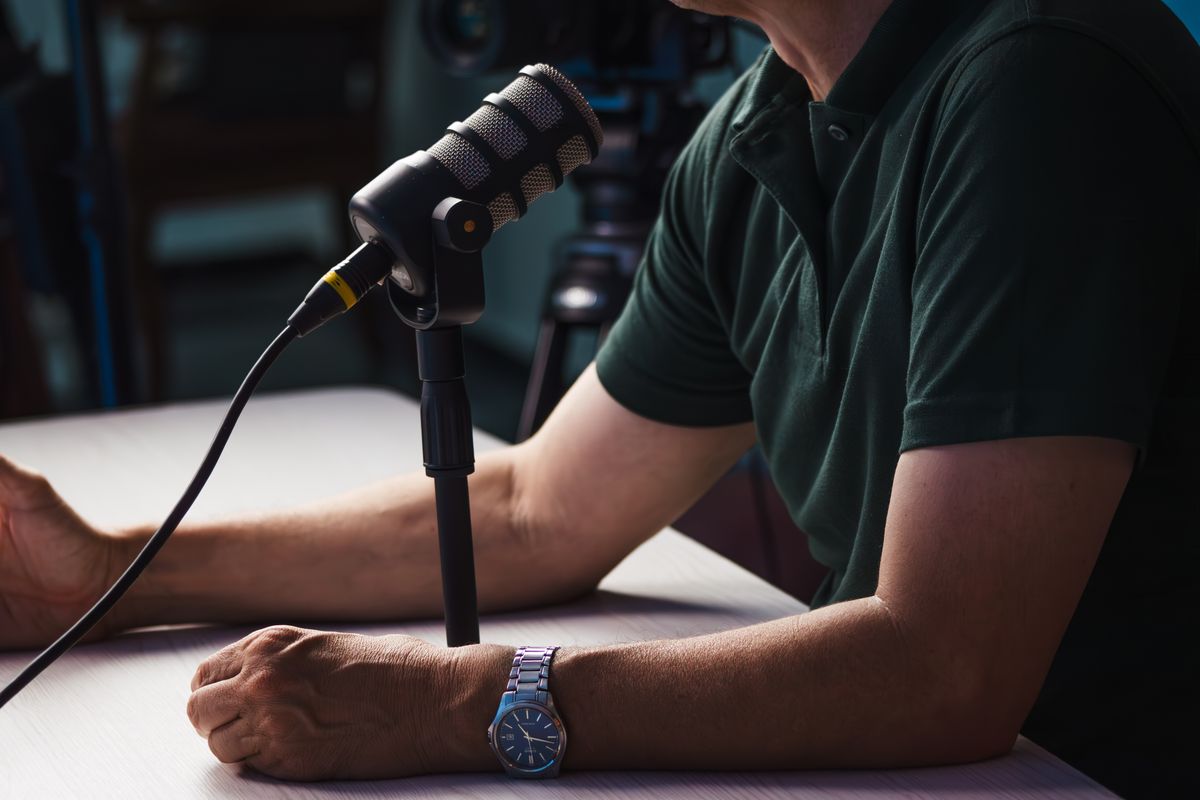
A podcast consultant is hired for one reason: the show is not doing the job the business needs it to do. Sometimes that means it does not exist yet. More often it means it exists, it has an audience, people say lovely things about it, and it has never produced a single client. That gap is the whole job. It is not a production problem, and it is almost never a downloads problem, which is why hiring an editor, a booking agency, or a video team rarely fixes it.
I want to be specific about what the work involves, because "podcast consulting" is a vague enough phrase that it can mean anything from a two-hour Zoom call to a six-month executive rollout.
The problem a podcast consultant is actually solving
There is no shortage of listeners. Edison Research's Infinite Dial 2026 put monthly podcast listening at 58% of Americans, an all-time high, and for the first time the 35-54 bracket leads consumption at 68%. That is the exact demographic most New Zealand and Australian business owners are trying to reach: decision-makers with budget.
There is, however, an enormous shortage of attention. Podcast Index tracks roughly 4.7 million feeds, of which only around 342,000 published anything in the last 30 days. Most shows are abandoned. Of the ones still running, a large share are running on habit rather than strategy, publishing weekly because they publish weekly.
So the market is not short of podcasts. It is short of podcasts built to convert. A podcast consultant works on the second problem.
What the work is not
Being clear about the boundaries saves everyone a call.
- It is not editing, mixing, or video production. That is a producer or an editor, and you should have one.
- It is not booking you onto other people's shows. That is guest pitching: different discipline, different deliverable. If that is what you actually want, that sits under Work With Me.
- It is not "growth hacking" downloads. Download count is the vanity number in this industry. A show with 400 of the right listeners will out-earn a show with 8,000 of the wrong ones, every time.
The five layers I audit in every engagement
When a show has an audience but no pipeline, the fault is almost always in one of five layers. I work through them in this order, because fixing layer four before layer one produces a very polished version of the wrong show.
1. Positioning: who the show is actually for
Not who you say it is for. Who it is for based on the last ten episodes. Most stalled shows are addressed to "anyone interested in business," which is nobody. The test: could a listener finish an episode and say, in one sentence, who this show is for and what it makes them better at? If not, nothing downstream will work.
2. Format: the container the value arrives in
Format is a commercial decision, not an aesthetic one. Interview shows build relationships and borrow authority. Solo shows build your authority but demand far more from your messaging. Hybrid shows do both and cost more time than most owners have. Episode length, cadence, and structure all follow from what you want the show to do, not from what your favourite podcast does.
3. The ask: what you invite people to do
This is where most shows quietly fail. Either there is no call to action, or it is buried in an outro nobody hears, or it is far too big a step ("book a strategy call" to a listener who found you eleven minutes ago). A working ask is proportionate to the relationship, appears where attention is highest, and is the same across episodes so it compounds.
4. The path: what happens after the ask
If the ask lands and the destination is your homepage, you have lost them. A path is a specific page, built for that listener, with one next action. It sounds obvious. It is missing from the majority of shows I audit.
5. Proof: the case that you are worth hiring
Podcasts are extraordinary at building trust and terrible at demonstrating competence, unless you deliberately build proof into episodes: client outcomes, numbers, named results, the specific before-and-after. Warmth without evidence produces fans. Fans do not become clients.
Run your own show through those five layers before you talk to anyone. You will usually find the break yourself, and you will have a much sharper conversation if you do decide to hire someone.
Individual host or B2B podcast service: two different jobs
The word "consultant" covers two engagements that barely resemble each other.
For a solo practitioner or independent host, the work is compressed and surgical. Usually one deep-work day on the show you already have (positioning, format, the ask, the path) plus a written 90-day plan you can execute without me, and a follow-up session to check what moved. You do not rebuild the show. You fix the conversion layer of the one you have.
A B2B podcast service is a different animal. When a company launches a branded or executive show, the constraint is rarely strategy alone, it is coordination. You have executives who are not natural broadcasters, a marketing team with other priorities, and a production partner who needs a brief. That work runs in phases: strategy and positioning first, then executive and host preparation before anyone records, then in-studio support during sessions, then structured episode quality review with the production team.
The difference matters when you are buying. A B2B podcast agency that only quotes you production hours is selling you episodes, not outcomes. Ask what happens to the show's positioning and conversion path, and who owns them. If the answer is "you do," you have hired a production house, which is fine, as long as that is what you meant to do.
When you should not hire a podcast consultant
Three cases where the honest answer is no.
- You have not published anything yet and have no clear idea who you serve. Fix the positioning of the business first. A show will amplify clarity; it cannot manufacture it.
- Your real problem is capacity, not strategy. If episodes are late because nobody has time to edit them, hire a producer.
- You want to be a guest, not a host. Being interviewed on established shows is faster, cheaper and lower-maintenance than running your own. I have written about that trade-off in The Podcast Trap, and if you are still deciding, How to Build Your Own Podcast walks through what hosting actually demands.
Five questions to ask before you hire anyone
- What is the first thing you would change about my show, and why that first? A good consultant will have a diagnosis, not a package.
- What does success look like in 90 days, in numbers I care about? Enquiries and qualified conversations, not downloads.
- Who owns the strategy once the engagement ends? You should leave with a written plan you can run.
- Have you done this in my market? New Zealand and Australian audiences are small, relationship-driven and unforgiving of hype. Tactics that work in a 300-million-person market often do not translate.
- What are you not going to do? Anyone who says they do everything is selling you the wrong thing.
Where to start
If you have a show with a real audience that has never produced an enquiry, the break is in one of those five layers, and you can usually find it yourself in an afternoon. If you would rather not guess, that is exactly what a podcast consulting engagement is for. Bring the show you have, or the one you are planning, and we will scope it properly.
Book a strategy call and you will leave with a straight answer on what it takes. No pitch deck.
Keep reading
PWRFULLY, podcast guesting and communication coaching. Auckland, New Zealand.